

Blogs
What Wholesale Buyers Should Ask Before Ordering Artificial Leather
Artificial leather is one of those materials that can feel like a shortcut to margin. It photographs well, it’s consistent on day one, and it lets you hit a price point that makes procuring cots quite reasonable. So yes, ordering it at wholesale can be a smart move. But bulk ordering can also backfire if you do not do proper research. A container arrives and the rolls look fine. Then cutting starts and the face layer scuffs. Or the material creases and refuses to recover. The worst part is that many of these failures could have been avoided before you had ever placed the order. In this blog, we will tell you all about asking the right questions early on so that you avoid returns, chargebacks, production delays, and the kind of supplier disputes that eat quarters. What Kind of Artificial Leather Are We Actually Buying? Artificial leather “Vegan leather” is an even vaguer term.. Neither tells you what the material will do under stress, heat, UV, or time. So the first question is not about price. It’s about the material characteristics. Typical leather types are PU-based materials, PVC-based materials, microfiber/synthetic suede constructions, or coated textiles marketed as bio-based blends. Each category behaves differently. So your best bet to prevent getting a faulty product is to ask for the technical datasheet. This should be done before you discuss lead times and color shades. The datasheet should include all measurable parameters: coating type, backing type, thickness, weight, usable width, and the standards used for any testing. What’s the Intended End Use and Is This Material Built for It? Artificial leather used for fashion bags is not the same as artificial leather used for upholstery. Footwear uppers demand flex endurance and crease behavior. Belts demand tensile stability and edge durability. So ask directly: what is the supplier’s recommended end use? Then ask a follow-up: what is it not suitable for? Good suppliers will tell you. Fake ones will try to sell you one roll that fits all uses and their product lineup will have no diversity. What Is the Base Construction: Coating + Backing + Adhesives? Coating details: thickness, softness, and what “premium” actually means The face layer is where most buyers focus, because that’s what customers touch. But the face layer is also where cracking and peeling become visible first. * Ask what the coating is made from and how thick it is. * Ask how the finish is achieved. * Ask about the topcoat, because topcoats often determine scratch resistance and stain behavior. • Backing fabric Backing is not just support. Woven backings often provide dimensional stability. Knit backings can add stretch and comfort but may distort under load. The backing weight and fiber content affect sewability, tear strength, and whether panels remain true after cutting. Some pertinent questions to inquire about this aspect are: * What is the stretch direction? * What is the shrinkage? If you’re producing at scale, small distortions turn into pattern mismatches and sewing issues and that means a higher reject rate. Adhesives and lamination method: where delamination begins Many artificial leathers are laminated systems. That means adhesive chemistry and bonding method matter for durability and long service life. Here, you must pose the following questions to determine the genuine quality: Is bonding heat lamination, solvent-based, water-based, or another approach? Then ask what conditions can weaken the bond. Delamination rarely announces itself in sampling. It shows up after production starts or after the product sits in a warehouse. Convenient, right? Performance Questions to Ask That Predict Product Returns • How strong is the abrasion resistance Abrasion is one of the most consequential specs, especially for upholstery, bags, and anything that rubs against clothing. Ask which test method was used and what results the material achieved. Also, ask whether the result is for the exact color and finish you’re buying, because finishes can change performance. • Is the Flex and crease resistance adequate? Flex testing matters when the leather material will bend repeatedly. Some artificial leather products where bending continuously is a normal part of usage are shoes, wallets, and straps. Ask for concrete flex data if your products ship or sell in colder climates. These include how the surface behaves after repeated bending: does it whiten, crack, or develop permanent crease lines? • How much is the tensile and tear strength? Tensile and tear strength affect strap failures. If the leather in your product is meant to carry weight, hang, or pull, you want measurable strength data. That means values and standards. Then compare those numbers to your product’s real load conditions. How Does the Leather Behave in Real Life? • Can it Tolerate a Broad Range of Temperatures? Artificial leather is a material designed for heavy use. Moreover, even delicate varieties have to withstand the conditions of transportation like heat in hot containers, cold trucks, and warehouses with varying control. Ask what temperature range the material is designed to tolerate. Ask what happens when it’s stored under compression at heat. Some materials can develop surface sticking, imprinting, or deformation. • Hydrolysis resistance If you’re buying PU-based material, hydrolysis resistance needs to be discussed directly. Ask whether the material has been tested for hydrolysis resistance and under what conditions. • UV aging and yellowing UV exposure can discolor and weaken finishes. This is true for indoor exposure as well where strong retail lighting can change light shades over time. Ask for UV aging data if your product will see sunlight or long retail display. • Safety and Compliance Different markets require different compliance frameworks, and you should verify requirements for your product category and destination. Still, the strategic question remains: can the supplier provide documentation to support your compliance claims? Ask what standards they can support for your target region. ask whether testing is done on the finished material and whether reports are recent and from credible labs. Outdated or generic reports are a classic trap. Restricted substances: where risk becomes legal, not cosmetic Artificial leather can involve harmful chemicals like plasticizers, solvents,and additives. That’s where restricted substance concerns enter: phthalates, heavy metals, azo dyes, formaldehyde, and certain solvents. Ask what restricted substances policy the supplier follows and what test reports they can provide. MOQ, Lead Times, and Lot Control • MOQ and price breaks MOQ is a crucial element that impacts consistency and the supplier’s willingness to control variables. If your MOQ is low, the supplier may run you as a small batch with more variability. If your MOQ is higher, you may gain more stable production controls. Neither is inherently better; it depends on your business model. • Lead times Long lead times invite “equivalent” substitutions, especially when raw materials are constrained. Ask for a confirmed production timeline and what happens if inputs change. Ask for pre-production approval protocols. If your supplier can switch backing or topcoat without your approval, you don’t have control. Packaging, Shipping, and Storage • Container conditions: your product’s first endurance test If your supply chain involves ocean freight, you’re sending your material through heat and humidity. Ask how the supplier packs to protect the face. Ask whether desiccants are used. These are vital for product preservation and minimizing the risk of loss. • Warehouse storage: keep it stable or watch it age Ask for storage guidelines and the warehouse climate conditions, like temperature range, humidity, etc. • Pricing: What Exactly Is Included in the Quote? Ask whether pricing is per meter or per yard, what the usable width is, and what thickness tolerances apply. For larger orders, payment terms matter as much as unit price. Deposits and documentation requirements should align with your risk. If the supplier wants aggressive terms while offering weak QC and vague specs, that’s not a deal. Conclusion Artificial leather rewards buyers who think like engineers and negotiate like adults. Define the material precisely. Tie performance tests to your real end use. Treat color and finish consistency as reorder insurance. Pressure-test logistics, storage, and production behavior before you scale. Then, and only then, talk about price as if it’s the main event. Because it isn’t. The main event is what happens after the first thousand units reach customers and start living real lives. That’s where your material choice either protects your brand or exposes it.
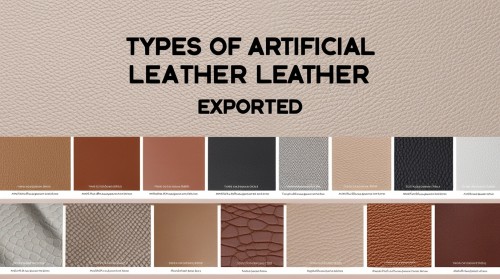
Types of Artificial Leather Exported Worldwide
Artificial leather has taken its place in the international trade markets. This is an artificial substance that resembles the appearance and texture of real leather and has benefits in its cost, uniformity, and adaptability during manufacture. Various industries use artificial leather, which includes the fashion and automotive industries. Knowledge of major exported types helps businesses and consumers choose materials that meet their needs. What Is Artificial Leather Basic Definition Artificial leather is an engineered product designed to look like genuine leather. It takes different base fabrics, which are coated with synthetic materials to produce the look and feel of leather. Artificial leather is also known as synthetic leather, or vegan leather. All these terms refer to materials produced by industry and not by animals. The demand for artificial leathers is driven by the global need for affordable and ethical products. Why It is Important in Global Trade. Artificial leather sales amount to billions of dollars every year. Nations with strong manufacturing capacity produce in large quantities for foreign markets. The material is used in industries that need leather-like qualities at lower prices than real leather. Ecological challenges and growing animal welfare consciousness are increasing the demand for alternatives to conventional leather. Many customers are interested in animal-free products. This is a rising market that favors the growth of international trade in artificial leather products. Polyurethane Leather Composition and Production Polyurethane leather foundation fabric is normally polyester or cotton. The leather-textured surface is produced by several layers of polyurethane. Thickness, texture, and finish are customizable during manufacturing processes. The producers can make smooth, glossy surfaces or patterns that mimic various leather grains. This versatility is what makes PU leather a favorite in different usages. Characteristics and Uses PU leather is softer and more flexible than other artificial leather varieties. It breathes better than others and is therefore cozy as clothing and furniture. The material is water and stain-resistant compared to real leather. Furniture producers use it in sofas, chairs, and cushions. PU leather is used in the automotive sector for vehicle interiors, such as seats and door panels. Export Markets The leading exporters of PU leather include China, South Korea, and Taiwan. These nations export to the fashion manufacturing centers in Europe, North America, and some other Asian countries. The quality of the material, combined with low cost, makes it very exportable. Polyvinyl Chloride Leather Manufacturing Process PVC leather involves the use of polyvinyl chloride on cloth material. The PVC forms a plastic-like texture that could be textured and colored to give the impression of leather. The type is less expensive than PU leather. Its manufacturing process is simple: a PVC paste is applied to a supporting material, which is then molded during heating. Extra layers introduce extra layers of thickness and a tougher layer. Textures and finishes are provided by surface treatment. Properties and Applications PVC leather is much more resistant to water and is easy to clean. It can withstand hard wear. Nevertheless, it is stiffer and less breathable than PU leather. The material is typically used as a component of commercial space upholstery, such as in restaurants and offices. PVC leather is used in luggage and sports equipment manufacturing for its durability. Water resistance is advantageous for marine applications. Global Distribution PVC leather is exported in large quantities by India, China, and Southeast Asian countries. It is priced lower, making it appealing to low-income consumers. Much of the export demand is dominated by industrial uses. Microfiber Leather Advanced Technology Microfiber leather is a high-end product of artificial leather. It applies very thin artificial fibers woven into fiber bundles to give the texture of synthetic suede or nubuck leather. The production process is more complicated than for normal artificial leathers. Microfiber fabric layers are covered with polyurethane and undergo special treatments. What has come out is content that closely matches the feel and look of high-quality leather. Other versions are almost exactly similar to real leather. Superior Qualities Microfiber leather is a great choice for its cooling properties and water absorption. It is not easily torn and is more efficient in shape compared to the other artificial ones. It is lightweight compared to real leather, and its durability is the same. Luxury goods manufacturers use microfiber leather in their high-end products. The material is used in high-end footwear, designer handbags, and high-class furniture. It is used by auto manufacturers as interior trim in luxury cars. Export Destinations The microfiber leather is manufactured in Japan, South Korea, and by specialized Chinese manufacturers, and exported. The importations of European luxury goods manufacturers are large. The increased cost portrays advanced production methods and high performance. Bi-Cast Leather Production Method Bi-cast leather is beginner-friendly, with a base layer of split leather covered with polyurethane. The hybrid is a combination of real leather support and synthetic outer coating. Lower quality leather splits are used in the process, which would otherwise be of limited value. The polyurethane makes the leather bottom appear uniform and serves as leather protection. The color and texture are controllable to an exact degree. This kind is a transition between all synthetic and real leather. Usage Patterns In furniture and fashion accessories, bi-cast leather is used. It offers a lower-grade leather at a lower price than top-grain leather. The material has a similar look with no variation of the natural leather. The limitation on some applications is due to durability. With heavy use, the polyurethane coating can peel or crack over time. There is a big difference in the quality of manufacturers. Trade Flows Bi-cast leather is exported to countries that have leather processing industries, such as India, Brazil, and Italy. Markets in search of leather value at an average cost import the same. It occupies a gap between fully synthetic and high-quality leather. Conclusion There is a variety of types available in global exports of artificial leather, each useful for different needs and price ranges. Familiarity with these types of choices will help buyers select suitable materials for their projects and navigate the enormous scope of the global artificial leather trade.
How to Printing and Customizing Tyvek Paper Products
Tyvek is a different medium of creativity and branding. This is a tough, waterproof material that can be printed and customized in any way, making it suitable for business materials and creative projects alike. As a small business owner interested in making branded items or someone with a passion for crafts, knowing how to print and make Tyvek custom enables plenty of opportunities. This blog will take you through everything you need to know to work with professional results. Learning about the Tyvek Printable Surface The ink does not take in the material like regular paper does. Instead, ink is applied to the surface and connected by various means, depending on the printing method used. This implies that certain inks are excellent, whereas others are greasy or don't stick well. Home printing using Desktop Printers Many people want to print Tyvek paper with standard home or office printers. This may indeed be so, but it would succeed under various conditions. The initial one is your printer's ability to print the material physically, given its thickness and flexibility. • Inkjet printers Inkjet printers usually have better results with Tyvek than laser printers. The deposition properties of inkjet printers can be used to enhance bonding to Tyvek surfaces. But the dry time of a standard inkjet ink on Tyvek can be longer than it is on regular paper. Patience is important. Allow printed sheets to dry before touching them so they do not smudge. • Laser printers To print on paper, laser printers employ heat to melt down toner. Tyvek is heat-resistant, and the toner is not always well-bonded to its synthetic surface. Some are better than others, depending on your computer printer model and the type of Tyvek. Small-sample testing helps save time and materials before large-scale testing. Preparing Tyvek for Desktop Printing Make your own Tyvek sheets in the paper size your printer accepts. The majority of home printers can easily handle letter-size paper. Use clean, square edges to prevent them from jamming in the printer. One sheet at a time instead of loading several sheets in the tray. The sheets may be catching together or not feeding into the feed rollers due to the material's slickness. When feeding manually, you have more control of the process and fewer paper jams. It is advisable to have ideal printer settings. Choose the best print setting of all. Other printers can use specialty papers or transparency film, which are compatible with Tyvek. The settings for the clearest, most lasting prints will have to be tested. Techniques of Commercial Printing • Commercial Printing Commercial printing processes are of higher quality and more efficient for large quantities or professional results. One of the most widely used printing techniques on Tyvek is screen printing. This method forces ink through a network screen onto the material surface. • Screen Printing Screen-printed results are colorful, durable, and resistant to washing off. It is perfect for making some design bags, banners, or covers with bold designs. Screen printing is most cost-effective when the order volume is 50 or more, especially for high-volume orders, since setup costs are lower. • Digital printing Digital printing technology has also improved significantly, and most commercial printers now offer digital printing on Tyvek. The technique is effective with small amounts or designs that should be printed in full color and high quality. Digital printing can print varying amounts of data, allowing every item to be customized. • Flexographic printing Flexographic printing is widely used, especially for products such as envelopes or wristbands. It is an economical high-speed printing process that is cost-effective in the thousands, but expensive to set up; hence, it is not effective for small orders. Choosing the Right Inks When printing on Tyvek, the choice of ink is of great importance. The ink does not stick to synthetic surfaces well. Inks formulated in solvents normally adhere well to Tyvek and do not smear once dry. These are typically inks for commercial printing. • UV-curable inks cure immediately when exposed to ultraviolet light. This fast-drying eliminates smearing and enables one to handle printed materials immediately. Many commercial printers use UV inks on Tyvek because of their durability and fast turnaround. • In domestic printing, inkjet inks that react with pigments typically work better on Tyvek than those that respond with dyes. Inks based on pigments are less smearable and have higher water resistance. The type of ink used in one of your printers depends on its specification. Designing Special Shapes and Products Tyvek can be used with die-cutting machines that are used in scrapbooking and crafts. These machines can cut fine shapes and are not affected by material thickness. Complex patterns, otherwise hand-cut, were probably complicated, but die cutting made it simple. • Professional die-cutting services offer uniformity and efficiency to businesses, producing small to large quantities of items whose shapes need to be tailored to fit. Steel rule dies can cut hundreds or thousands of identical pieces promptly and precisely. Heat Sealing and Bonding To make pockets, envelopes, or bags from Tyvek, you need to join the pieces. PVC glue often became ineffective because Tyvek is not easy to stick to, as its surface is smooth. Heat sealing offers a strong, permanent bond. • Heat sealing involves fusing the plastic fibers to the seam. Special heat-sealing devices can be found, or a household iron set to low or medium heat can be used for minor projects. You can stick the iron and Tyvek together by placing a parchment in between them. • To form a visible seam, the bandage is made with pressure-sensitive tape that bonds to Tyvek. This tape is particularly designed to stick to the synthetic materials. The standard tape can come off over time, leaving the object wet. Another way of joining pieces is by sewing Tyvek. Insert a needle used on synthetic fabrics, and adjust the sewing machine to use longer needles. Tyvek may become weak when the holes created by the needles are too widely spaced; therefore, spacing them would ensure strength. Special Effects and Finishes Additions. In addition to simple printing, there are methods for visually enriching Tyvek products. Embossing is the process of creating raised patterns by stamping a material with hot dies. The technique provides a texture and depth without the use of ink or paint. • Tyvek is stamped using metal foil under pressure and heat. This procedure produces eye-catching, cost-effective highlights ideal for logos, borders, or decorative features. There are gold foils, silver foils, and colored foils. • Transparent or semi-transparent Tyvek may also be printed or adorned to create an interesting play of light. The overlaying of various works makes it deep and visually rich. These are used to make lanterns, window decorations, and works of art. • Wrinkles characterize Tyvek products. To give it texture, crumple Tyvek tightly and rub out the permanent creases. This process is particularly effective in bags or fashion accessories that require a leather-like look. Handling and storage of Printed Tyvek Printed Tyvek products should be kept flat or loosely tied up to avoid noticeable creases in printed regions. Folding of printed areas should be avoided where possible, as folding the same material multiple times may crack some inks over time. • Store Tyvek-printed material in intense heat. Although Tyvek itself does not melt at moderately high temperatures, some inks may melt at higher temperatures. Normal room temperature and the normal usage conditions are not a problem. Conclusion The possibilities offered by this combination of modern printing and Tyvek customization, and its versatility, are almost endless. In both work and art, printed and customized Tyvek materials have proven time-tested, and nothing matches regular paper for resilience and distinctiveness. Using appropriate methods and some trial and error, you can produce professional-quality Tyvek custom products for any use.
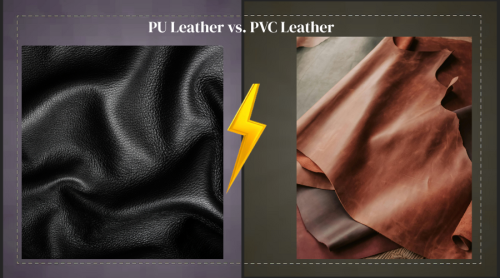
PU Leather vs. PVC Leather: Key Differences You Should Know
Synthetic leather is available in various forms, of which the most widespread types are PU and PVC. There are clear differences in performance, comfort, and durability in these two materials, although on the surface they seem to be the same. What makes these differences useful is that they would enable one to make informed buying choices. Material Composition Polyurethane is used as the main coating of PU leather. The manufacturers coat a fabric base, on top of which, in most cases, is made of cotton, polyester, or a mixture. What comes out is what looks like an actual leather finish. PVC leather is a type of polyvinyl chloride. This poly material is applied to a piece of fabric to form a water-resistant, strong surface. The process of its production is, in a substantial way, different from that of PU leather. Physical Characteristics These materials have a different feel. Texture and Flexibility • PU leather is more comfortable and flexible. The fabric is pliable and shapes itself to body movements. PU leather-upholstered furniture offers a comfortable sitting environment just like genuine leather. •PVC leather is more rigid. The surface formed by molding the plastic material provides a more rigid surface that is less flexible to bending. It is even stiffer when one sits on PVC furniture or even wears PVC clothing. The substance needs a long time to be used and become more flexible. Temperature Response • PU leather is more responsive to temperature changes. The fabric is not very cold or hot so that it can be used in other seasons as well. • PVC leather does not retain heat. When the weather is not hot, the surface is cold and painful to touch, and when it is hot, the material is sticky. The non-breathability is a factor that leads to the accumulation of perspiration in prolonged contact. Durability and Resistance to Wear The value of such materials is directly related to their durability. • PU leather has better long-term performance. The thin covering is flexible and does not crack when bent and stretched repeatedly. PU leather products are long-lasting and retain their look when properly cared for. • PVC leather is more easily wearable. Areas that are frequently flexed form cracks and peeling. The hard cover disintegrates under pressure, especially in the high-wear areas such as chair armrests or garment elbows. The two content materials are resistant to moisture and light stains. Nonetheless, PU leather is more resistant to surface abrasions, leaving less visible traces of daily use. Scratches and scuff marks more easily mark PVC surfaces. Environmental Considerations There is a difference between the effects of production and disposal on environmental sustainability. • The production of PU leather consumes fewer toxic substances. Less waste is produced during the manufacturing stage of PVC production than in the manufacturing stage of PVCs. PU leather also requires less energy during production. • PVC manufacturing deals with chlorine, among other chemical substances, which brings environmental difficulties. The production plants generate relatively higher levels of pollutants and use more energy. These are the causes of increased ecological footprint. There is another issue of disposal. When discarded, PU leather rots more easily than PVC. The decomposition takes place at a gradual pace, but even slower than that of PVC. Air Absorbency Convenience in use is influenced by breathability. • PU leather allows a little air to pass through. Permeability reduces moisture accumulation and enhances comfort when in contact for extended periods. The PU leather seating and clothing are more ventilated. • PVC leather is almost an air-blocker. The solid plastic coating prevents moisture and heat from reaching the skin. The effect of long-term contact is discomfort due to perspiration buildup. This feature renders PVC inapplicable for applications that require breathability. Odor Profile Depending on composition, new products give out different smells. • PU leather emits a faint smell that dissipates soon after purchase. This smell is faint and disappears after several days of wearing. • When PVC leather is opened, it emits a strong chemical smell. This is a great stinking odor that has been around for several weeks or months. Some people are not fond of the scent or sensitive to the chemical emissions. Cost Analysis Price differences reflect the complexity of manufacturing and the quality of materials. • The cheaper option is PVC leather. A minimal cost of production translates into low retail prices. Cost-effective manufacturers use PVC in cost-effective goods. • PU leather is of higher pricing. The production has to use more complex materials and methods, which increases production costs. PU leather products are priced high in the market. Applications Various industries prefer different materials depending on their requirements. • PU leather is used in furniture of good quality, fashion accessories, footwear, outerwear, and in car interiors. PU leather is normally used in products that need comfort, durability, and beauty. The material is appropriate for products intended for long-term use. • PVC leather is used for low-end furniture, entry-level bags, waterproof clothing, and stationery. PVC leather is used in industries where cost savings are a higher priority than comfort. The material works well where tactile value is not a primary factor in price. Maintenance Requirements Materials differ slightly regarding care procedures. • PU leather is compatible with ordinary cleaning techniques. Most of the dirt and stains are removed by taking them off using a damp cloth with mild soap. The material can withstand various cleaning solutions without deteriorating. Regular spill cleanup and dusting keep it presentable. • The cleaning of PVC leather should be more specific regarding the selection of products to use. Some chemicals can spoil the plastic coating. The surface features streak more than PU leather. By not using harsh cleaners, one avoids premature wear on the coating. Selection Criteria Depending on various factors, materials can be selected appropriately. • PU leather is an advantage for quality-oriented applications. The additional investment is justified in the products that need to be comfortable, durable, and have a better feel. Despite being more expensive, the material would perform better across several metrics. • PVC leather can be acceptable for budget-constrained projects. PVC can be used in applications or objects with temporary use or a limited lifespan. Price is lower, and therefore, PVC becomes viable where cost is the overriding consideration. Conclusion PU and PVC leather target different customers depending on their unique characteristics. PU leather offers high comfort, durability, environmental friendliness, and quality. PVC leather is slightly cheaper and offers a reasonable level of performance. Being aware of these basic differences enables the selection of materials that suit the project's objective and satisfy users. Both materials have their proper applications, and the right choice will ensure satisfaction with the final product.
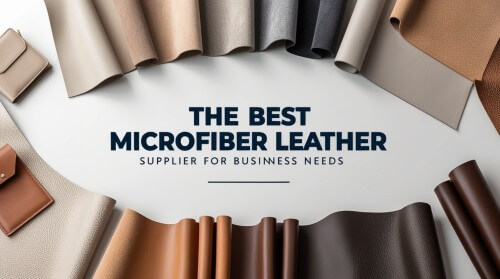
How to choose the Best Microfiber Leather Supplier for Your Business?
The use of microfiber leather has gained momentum in most industries. Companies use it to make furniture, car seats, bags, shoes, and clothing. The quality of the products and the business's success depend heavily on whether the business can find the right supplier of this material. This blog outlines critical factors to consider when choosing a supplier of microfiber leather. Understand your Material Requirements Businesses would require clarity on their needs before contacting suppliers. A specific type of microfiber leather is needed for various products. The material is important for its thickness. The upholstery of furniture will require a denser microfiber leather than shoes and bags will. The car interior should be covered with a material that retains heat and blocks sunlight. Combining such information helps identify suppliers capable of delivering to the desired specifications. Another is the consistency of the colors. Some businesses require color in several orders. Other people may desire seasonal color variations. Color matching and consistency are other capabilities that suppliers offer. The Supplier Research Background Not every supplier is of equal level of professionalism and quality. Years in Business Suppliers with stronger track records tend to operate more stably. They know the market better, and their production has become perfected. New suppliers may offer reasonable prices, but old suppliers bring reliability and experience. Production Capacity A supplier's capacity dictates its ability to manage order volumes. Boutique companies have minimal requirements suitable for small suppliers. A larger organization needs suppliers capable of performing a large number of operations without delay. Some suppliers deal with small custom jobs. Some are concerned with mass production. Problems are avoided in the future by matching the supplier's capacity with the business needs. Evaluate Material Quality There is a big difference in quality between suppliers of microfiber leather. It is essential to test samples before placing an order. Request Multiple Samples Good suppliers do not charge too much for giving samples. Ask about the various grades and finishes that they have. It displays the quality range offered and assists with comparison. Every sample is supposed to have specifications. These include thickness, weight per square meter, and composition information. With such information, it will be easier to compare. Physical Testing Samples should be extensively tested. Elasticity can be determined by stretching the material. Wipe the surface and check whether it wears easily. Repeat this bending to see whether it is cracked. Such basic tests tell much about quality. Many applications require water resistance. Apply a few drops of water to the sample and see the reaction. Microfiber leather is a good water repellent. The supporting material is also worthy of consideration. Good support prevents tearing and extends product life. A lack of strong support causes difficulties in the production process and reduces the end product's value. Check Standards and Certifications Verified suppliers also have some certifications that reflect quality standards. In most countries, there are certifications for materials used in furniture or automotive applications. These standards ensure that the materials meet safe and quality standards. The suppliers are supposed to provide their certification documents easily. The environmental certifications have become significant. Other companies would also like to work with suppliers that use environmentally friendly production processes. The certifications demonstrate ecological concern. Independent laboratory testing reports are also credible. Suppliers who are willing to pay for third-party testing have assurance about their products. Evaluate Communication Skills Cooperation with a supplier is a continuous process of communication. Mistakes and frustration stem from poor communication. Response time indicates the importance suppliers place on customer relationships. Suppliers who take days to respond to even the simplest questions might create problems when a situation becomes urgent. Rapid service implies increased service and customer needs. Placing orders may be difficult due to language barriers. The suppliers are supposed to have employees who communicate clearly with the buyer. It is important to have technical knowledge. The suppliers' representatives are expected to be familiar with their products. They would be asked specific questions regarding material properties, processing, and usage. Compare Pricing Structures The price is a critical factor, but it must not be the sole factor. Learning About Price Differences The quality of the materials determines prices, order quantities, and suppliers' locations. Very low prices may indicate poor-quality materials or a poor business practice. The very high prices are not necessarily indicators of the highest quality. The majority of suppliers offer better prices on large orders. Knowledge of minimum order quantities and quantity discounts will be helpful in the purchase planning. Hidden Costs Go past the quoted price per meter. The costs of shipping may be high, particularly when dealing with international suppliers. Others are charged an additional fee for tailor-made color or special finishes. There are costs for payment processing charges. Sample costs, though not big, are expected to be reasonable. Other suppliers have been deducting the first-order sample costs to demonstrate good faith. Review Delivery Terms Punctual delivery keeps production on schedule and makes customers happy. • Lead Times The suppliers are supposed to give explicit details of production and delivery schedules. Common merchandise will usually be shipped faster than custom merchandise. These timelines understand the inventory planning and fulfill the customer commitments. Other suppliers maintain stores with best-selling items so they can be delivered quickly. Everything is made to order by different people. Stock is available to influence delivery speed. • Shipping Options The various shipping types are fast and have different prices. Airfreight is very fast but very expensive. The cost of transporting a large quantity of goods by sea is lower, but the journey takes longer. There should also be many shipping options that suppliers cater to various needs. The ability to track is desirable. Anxiety will be reduced by knowing the location of shipments at any time, which will assist in planning. Discuss Minimum Order Requirements All suppliers have minimum order quantities. Minimums are a waste of capital and storage space. The suppliers may have extremely high minimum order quantities, which may be problematic for small businesses. It is reasonable to find suppliers with minimums that are not too high for a company's size. Some suppliers are flexible about the minimum number of first-time customers. This enables one to test the association without significant commitment. Conclusion The selection of a microfiber leather supplier must be carefully determined according to several factors. Price is not as important as quality, reliability, communication, and service. Those suppliers who agreed to business needs and values are excellent long-term business partners. Personal time spent researching, testing samples, and verifying credentials will be rewarded with high-quality products and trouble-free results. The appropriate supplier will assist the businesses in providing quality products to customers at all times.
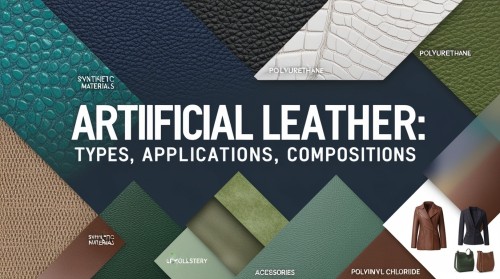
What are Artificial Leather? Types, Applications, Compositions
There’s a reason “leather” still commands respect in fashion, furniture, and automotive design. It whispers luxury. It signals endurance. But the conversation has shifted. Today, the real story isn’t about animal hide; it’s about artificial leather. Synthetic. Engineered. Ethical. Call it what you like; faux leather, PU, vegan leather it’s rewriting the rulebook of material innovation. Let’s unpack it. What it is. Where it came from. Why it matters more than ever. Understanding Artificial Leathers At its core, artificial leather is a material designed to replicate the look, feel, and performance of real leather without relying on animal skins. It’s not just a cheap knockoff anymore. It’s a deliberately engineered product. Manufacturers call artificial leather with various names. Its known as synthetic leather in industrial circles, faux leather in fashion, and vegan leather in lifestyle branding. The names differ, but the concept stays the same: create a surface that imitates the grain, texture, and durability of the real thing while having no downsides of the real leather like lack of scalability, and expensive sourcing cost. Artificial leather is a final product that combines concepts of chemistry, sustainability, and design. It’s where material science meets market demand. Composition & Types Artificial leather manufacture involves using a fabric base material usually made from polyester, cotton, or nylon. This base material is a canvas over which a polymer coating is applied. In this scenario, it is commonly polyurethane (PU) or polyvinyl chloride (PVC). These coatings are important as they impart the fabric with various properties that enable it to adapt to diverse design and functional requirements. One property is a smooth, supple texture, while the other is water-resistance. • PU leather is softer, more breathable, and considered the eco-friendly option. PVC leather, on the other hand, is tougher and more resistant to moisture and abrasion. But its manufacturing process is not as climate-friendly. Both have their uses, however. PU is widely used in giving a premium feel to interiors and high-end fashion. In contrast, PVC is the main preferred faux leather for automotive and marine upholstery. • Then there’s the new wave of more advanced artificial leather materials. They are chemically processed from plant-based resins and recycled plastics. With a focus on climate-friendly manufacturing practices, an increasing number of these innovative materials are being utilized to create products. • Faux leather’s composition is evolving with every technological leap, and in an industrial sense, it is constantly being engineered to get closer to the real thing or better. History & Origin To understand where artificial leather stands today, you’ve got to trace its origins. Let us go back to the conditions of the 19th century, when resource scarcity and industrial growth fueled experiments with fabric coatings. The first recorded synthetic leather, called Presstoff, was developed in Germany during World War II as a substitute for natural leather which was in acute shortage. • Presstoff was layered paper pulp treated with resins, and it worked for belts, book covers, and even shoes. But it wasn’t durable enough. Still, the innovative idea became popular because the material promised the look and function of leather, and also allowed full control of the cost and supply. • The real breakthrough came in the 1960s, when chemical engineers accomplished the perfection of PVC-coated fabrics. The shift in leather manufacturing was instant: leather alternatives became mass-producible and inexpensive. Car interiors, handbags, sofas; all could now flaunt the same high-end look at a fraction of the price. • Fast-forward to the late 20th century, and polyurethane-based faux leathers took over. They were softer, more flexible, and crucially, more breathable than PVC. That’s when the fashion industry began to take synthetic leather seriously. Today, we’re witnessing the next revolution: bio-based artificial leathers. Pineapple leaves, cactus fibers, apple skins, and mycelium structures are the natural raw materials replacing toxic plastics. The goal is to mimic the performance of leather and make manufacturing more sustainable. Importance & Application Here’s the strategic part. Why artificial leather matters; not just aesthetically, but economically and ethically. •First, cost control and scalability. Natural leather is expensive, limited by the availability of livestock and tanning processes. Synthetic leather breaks that chain. It can be produced consistently, in uniform quality, at an industrial scale. No flaws, no irregular grain patterns, no waste. Manufacturers love that predictability. • Second, design freedom. Artificial leather can be dyed into any color, and given any kind of finish ranging from matte, glossy, suede-like, to metallic. It gives designers creative freedom that genuine leather can’t. Want a thousand identical seats for a car model? Done. Want a neon pink tote with crocodile texture? Easy. • Third, sustainability. This is the domain where the narrative has undergone significant shifts. While early synthetic leathers were criticized for their petroleum base and plastic waste, newer generations are closing that loophole. Sustainability innovation is being led by newer materials, such as water-based PU coatings, recycled polymer backings, and plant-derived resins. The global “vegan leather” movement is not just about animal ethics anymore but also covers carbon efficiency and circular production models. • Fourth, cross-industry relevance. Artificial leather is a versatile material with applications in various sectors, including fashion, footwear, upholstery, and many others. From the seat you’re sitting on to the cover of your laptop, it's a daily part of your lifestyle. It doesn’t lack practicality either, as it is both durable and aesthetically appealing. And let’s not forget performance. Artificial leather resists water. It’s easier to clean. It doesn’t crack as easily under heat. In high-traffic environments, such as restaurants, hotels, or vehicles, synthetic leather outperforms the real thing in terms of longevity and upkeep. The Real Conversation Artificial leather isn’t just a substitute anymore. It’s how industries are future-proofing their supply chains and making manufacturing more climate-conscious.. It’s how brands appeal to new generations who care about ethics and aesthetics. The challenge now lies in transparency. Brands have to answer: what’s your leather made of? PU, PVC, or bio-based? Does it have potential for recyclability? What’s the carbon cost per square meter? These questions shape buyer decisions and corporate reputations alike. The Takeaway We’re in an era where materials are stories. And artificial leather tells one of the most compelling ones. A story of invention born from necessity. A story of design meeting conscience. Synthetic leather, faux leather, or artificial leather, whatever you may call it, the reality is that it’s no longer an alternative choice. It’s the smart choice: engineered for performance, having a visual appeal and aligned with a future that values responsibility as much as style.
Featured Articles
Artificial leather is one of those materials that can feel like a short
READ FULLArtificial leather has taken its place in the international trade marke
READ FULLTyvek is a different medium of creativity and branding. This is a tough
READ FULL