

Types of Artificial Leather Exported Worldwide
Types of Artificial Leather Exported Worldwide
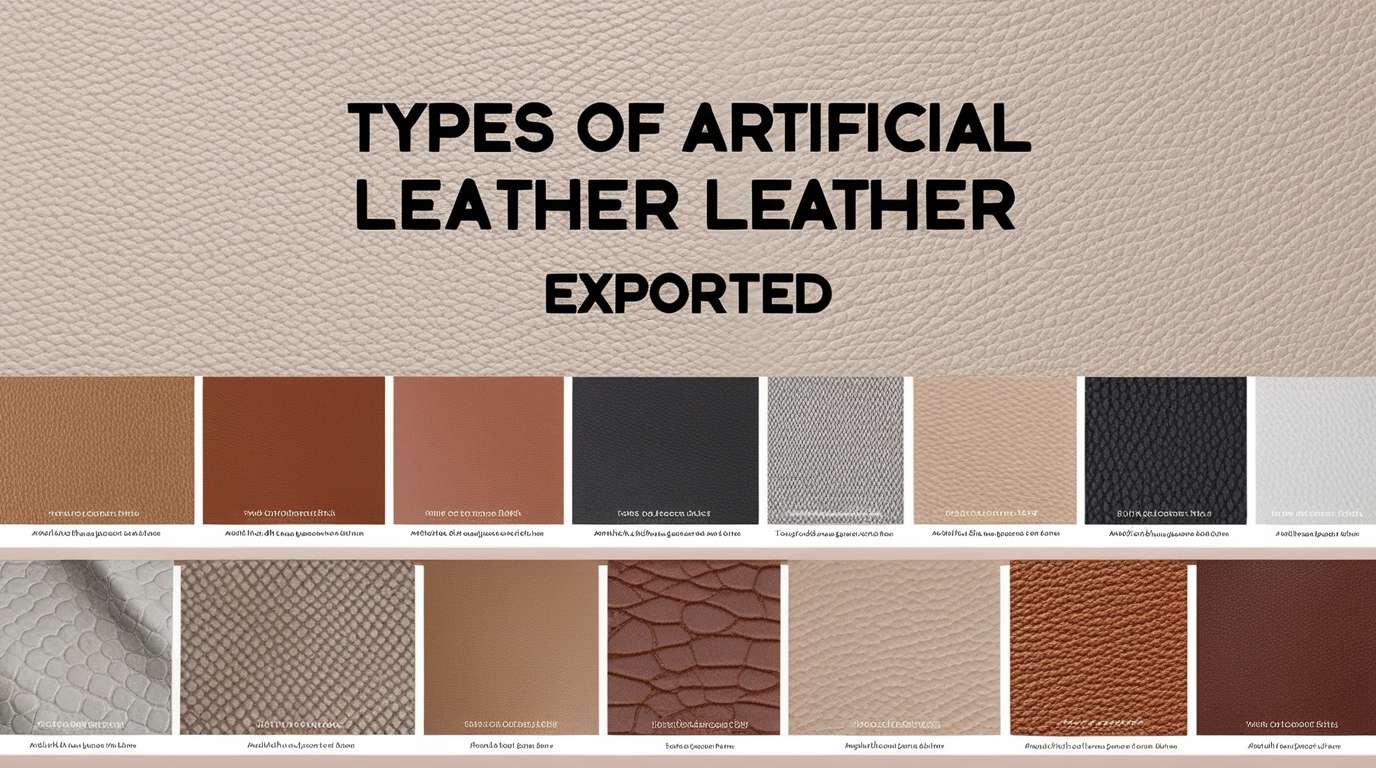
Artificial leather has taken its place in the international trade markets. This is an artificial substance that resembles the appearance and texture of real leather and has benefits in its cost, uniformity, and adaptability during manufacture.
Various industries use artificial leather, which includes the fashion and automotive industries. Knowledge of major exported types helps businesses and consumers choose materials that meet their needs.
What Is Artificial Leather
Basic Definition
Artificial leather is an engineered product designed to look like genuine leather. It takes different base fabrics, which are coated with synthetic materials to produce the look and feel of leather.
Artificial leather is also known as synthetic leather, or vegan leather. All these terms refer to materials produced by industry and not by animals. The demand for artificial leathers is driven by the global need for affordable and ethical products.
Why It is Important in Global Trade.
Artificial leather sales amount to billions of dollars every year. Nations with strong manufacturing capacity produce in large quantities for foreign markets. The material is used in industries that need leather-like qualities at lower prices than real leather.
Ecological challenges and growing animal welfare consciousness are increasing the demand for alternatives to conventional leather. Many customers are interested in animal-free products. This is a rising market that favors the growth of international trade in artificial leather products.
Polyurethane Leather
Composition and Production
Polyurethane leather foundation fabric is normally polyester or cotton. The leather-textured surface is produced by several layers of polyurethane.
Thickness, texture, and finish are customizable during manufacturing processes. The producers can make smooth, glossy surfaces or patterns that mimic various leather grains. This versatility is what makes PU leather a favorite in different usages.
Characteristics and Uses
PU leather is softer and more flexible than other artificial leather varieties. It breathes better than others and is therefore cozy as clothing and furniture. The material is water and stain-resistant compared to real leather.
Furniture producers use it in sofas, chairs, and cushions. PU leather is used in the automotive sector for vehicle interiors, such as seats and door panels.
Export Markets
The leading exporters of PU leather include China, South Korea, and Taiwan. These nations export to the fashion manufacturing centers in Europe, North America, and some other Asian countries. The quality of the material, combined with low cost, makes it very exportable.
Polyvinyl Chloride Leather
Manufacturing Process
PVC leather involves the use of polyvinyl chloride on cloth material. The PVC forms a plastic-like texture that could be textured and colored to give the impression of leather. The type is less expensive than PU leather.
Its manufacturing process is simple: a PVC paste is applied to a supporting material, which is then molded during heating. Extra layers introduce extra layers of thickness and a tougher layer. Textures and finishes are provided by surface treatment.
Properties and Applications
PVC leather is much more resistant to water and is easy to clean. It can withstand hard wear. Nevertheless, it is stiffer and less breathable than PU leather.
The material is typically used as a component of commercial space upholstery, such as in restaurants and offices. PVC leather is used in luggage and sports equipment manufacturing for its durability. Water resistance is advantageous for marine applications.
Global Distribution
PVC leather is exported in large quantities by India, China, and Southeast Asian countries. It is priced lower, making it appealing to low-income consumers. Much of the export demand is dominated by industrial uses.
Microfiber Leather
Advanced Technology
Microfiber leather is a high-end product of artificial leather. It applies very thin artificial fibers woven into fiber bundles to give the texture of synthetic suede or nubuck leather. The production process is more complicated than for normal artificial leathers.
Microfiber fabric layers are covered with polyurethane and undergo special treatments. What has come out is content that closely matches the feel and look of high-quality leather. Other versions are almost exactly similar to real leather.
Superior Qualities
Microfiber leather is a great choice for its cooling properties and water absorption. It is not easily torn and is more efficient in shape compared to the other artificial ones. It is lightweight compared to real leather, and its durability is the same.
Luxury goods manufacturers use microfiber leather in their high-end products. The material is used in high-end footwear, designer handbags, and high-class furniture. It is used by auto manufacturers as interior trim in luxury cars.
Export Destinations
The microfiber leather is manufactured in Japan, South Korea, and by specialized Chinese manufacturers, and exported. The importations of European luxury goods manufacturers are large. The increased cost portrays advanced production methods and high performance.
Bi-Cast Leather
Production Method
Bi-cast leather is beginner-friendly, with a base layer of split leather covered with polyurethane. The hybrid is a combination of real leather support and synthetic outer coating. Lower quality leather splits are used in the process, which would otherwise be of limited value.
The polyurethane makes the leather bottom appear uniform and serves as leather protection. The color and texture are controllable to an exact degree. This kind is a transition between all synthetic and real leather.
Usage Patterns
In furniture and fashion accessories, bi-cast leather is used. It offers a lower-grade leather at a lower price than top-grain leather. The material has a similar look with no variation of the natural leather.
The limitation on some applications is due to durability. With heavy use, the polyurethane coating can peel or crack over time. There is a big difference in the quality of manufacturers.
Trade Flows
Bi-cast leather is exported to countries that have leather processing industries, such as India, Brazil, and Italy. Markets in search of leather value at an average cost import the same. It occupies a gap between fully synthetic and high-quality leather.
Conclusion
There is a variety of types available in global exports of artificial leather, each useful for different needs and price ranges. Familiarity with these types of choices will help buyers select suitable materials for their projects and navigate the enormous scope of the global artificial leather trade.
Featured Articles
Artificial leather is one of those materials that can feel like a short
READ FULLArtificial leather has taken its place in the international trade marke
READ FULLTyvek is a different medium of creativity and branding. This is a tough
READ FULL